





 New Code Sent!

REFRIGERATOR SIZES: A GUIDE TO MEASURING FRIDGE DIMENSIONS
The refrigerator is a centerpiece of your kitchen, keeping your food fresh and delicious. This article will cover different refrigerator dimensions and features so that you can find the right fridge for your space.
Refrigerators come in various styles, capacities and overall sizes. Standard refrigerator sizes range from around 24 to 40 inches in width, 62 to 72 inches in height and 29 to 36 inches in depth. Generally speaking, French door and side-by-side refrigerators will be larger in width and height, though counter-depth models are frequently available in these two configurations. Top and bottom freezer refrigerators are more often available in smaller sizes.


WHAT ARE STANDARD REFRIGERATOR DIMENSIONS?
You can expect standard refrigerator dimensions to range between 62 to 72 inches tall, 29 to 36 inches deep, and 24 to 40 inches wide. These are typically average-size fridges that are most commonly sold.
If you’re shopping for a Maytag® refrigerator, the widths are often 30, 33 and 36 inches. Generally, for doors to swing open unobstructed next to a fixed wall, allow for 2½" of clearance. Please refer to the owner’s manual or installation instructions for the specific requirements for your refrigerator.
COMMON REFRIGERATOR HEIGHT, DEPTH AND WIDTH MEASUREMENTS*
| HEIGHT | DEPTH | WIDTH | |
|---|---|---|---|
| Top Freezer | 65’’-69’’ | 24’’-33’’ | 23’’-36’’ |
| Bottom Freezer | 65’’-69’’ | 24’’-33’’ | 23’’-36’’ |
| French Door | 67’’-70’’ | 29’’-35’’ | 30’’-36’’ |
| Side-By-Side | 67’’-70’’ | 29’’-35’’ | 30’’-36’’ |
| HEIGHT | DEPTH | WIDTH | |
|---|---|---|---|
| Top Freezer | 65-69’’ | 24-33’’ | 23-36’’ |
| Bottom Freezer | 65-69’’ | 24-33’’ | 23-36’’ |
| French Door | 67-70’’ | 29-35’’ | 30-36’’ |
| Side-By-Side | 67-70’’ | 29-35’’ | 30-36’’ |
*Measurements are averages. Exact measurements may vary by model and manufacturer.
Note: If you want your refrigerator to sit more flush with your counters, counter-depth options like these models from Maytag brand may be your best bet—but keep in mind that they are typically shallower than their standard-depth counterparts, such as these models from Maytag brand.

TOP FREEZER & BOTTOM FREEZER REFRIGERATOR DIMENSIONS
Top freezer refrigerator dimensions and bottom freezer refrigerator dimensions are often similar, with measurements ranging from around 23 to 36 inches wide, 65 to 69 inches tall and 24 to 33 inches deep, though some models vary.
Top and bottom freezer refrigerators are often reliable options that have their own set of benefits depending on the convenience you’re looking for. Top freezer refrigerators offer a classic design, typically providing more fridge space for fresh food. Bottom freezer refrigerators generally come equipped with more freezer storage than top freezers, so they are great for storing larger frozen items.
SHOP MAYTAG® TOP FREEZER AND BOTTOM FREEZER REFRIGERATORS
Keep food fresh with select top freezers from Maytag brand featuring the EvenAir™ Cooling Tower, or find whatever you’re looking for in select Maytag® bottom freezer refrigerators with BrightSeries™ LED lighting.

FRENCH DOOR & SIDE-BY-SIDE REFRIGERATOR DIMENSIONS
French door refrigerator dimensions and side-by-side refrigerator dimensions often have similar measurements ranging from around 30 to 36 inches wide, 67 to 70 inches tall and 29 to 35 inches deep, though some models vary.
Upgrade your kitchen with French door and side-by-side refrigerators, providing both modern and sleek design. French door refrigerators offer spacious storage and easy access. Side-by-side refrigerators are typically designed to provide a similar amount of storage for both the fridge and the freezer.
SHOP MAYTAG® SIDE-BY-SIDE AND FRENCH DOOR REFRIGERATORS
Shop select Maytag® side-by-side refrigerators with features like an Exterior Water and Ice Dispenser and an Arctic Blue Interior, or opt for select Maytag® French door refrigerators with XL Capacity featuring a 31 cu. ft. interior.


HOW TO MEASURE FRIDGE DIMENSIONS
Wondering what refrigerator dimensions best fit in your space? When considering refrigerator measurements, it’s good to note that models vary in size based on the style and capacity you choose.
Follow this fridge size guide with refrigerator size charts to help you figure out how to accurately measure the space where your refrigerator will be installed.
WHAT YOU’LL NEED:
Measuring Tape
This Guide
1. SELECT YOUR REFRIGERATOR STYLE
Refrigerators come in different styles, which are available in a range of sizes. As you walk through the following steps for measuring your kitchen cutout, reference the size examples below to see if the style you want will fit your space. The specs shown below are generalizations to give you an idea of what might be available. Find your specific model specs online or in a store for exact measurements before you buy.
Need help picking which refrigerator style is best for you? Read this guide on how to choose from different types of refrigerators.
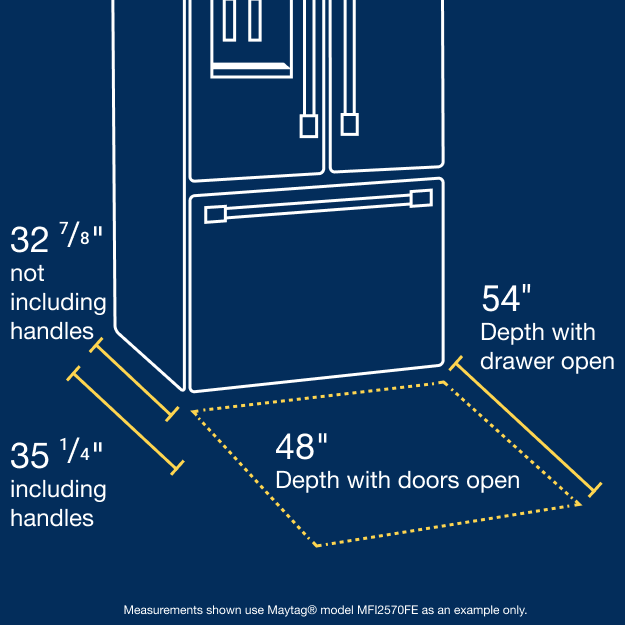
2. MEASURE REFRIGERATOR DEPTH
When measuring for a refrigerator, decide what depth style you prefer.
Standard-Depth:
Measure from your wall with a little room to extend a few inches past your cabinets.
Counter-Depth:
Measure from your wall to about the edge of your counter. Learn about counter-depth refrigerators.
DOES YOUR KITCHEN HAVE AN ISLAND?
Measure the space in front of the refrigerator so you can be sure that doors and drawers can open without bumping into anything. Leave about 3-4 feet between counters and the island to ensure comfortable walkways and unobstructed appliance doors.
To determine the right amount of space between your fridge and kitchen island, be sure to measure your refrigerator’s:
Depth with drawer open
Depth with doors open
Not including handles
Including handles
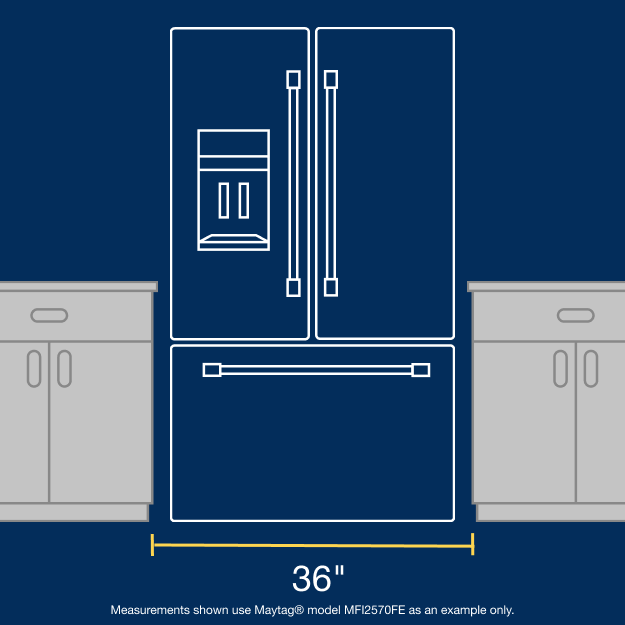
3: MEASURE REFRIGERATOR WIDTH
Measure from wall to counter, cabinet to cabinet or whatever may be on either side of your refrigerator space to determine its width.
Note: If your refrigerator is located next to a wall, leave 3 3⁄4 inches between the wall and the hinge side of the door, so it can swing open.
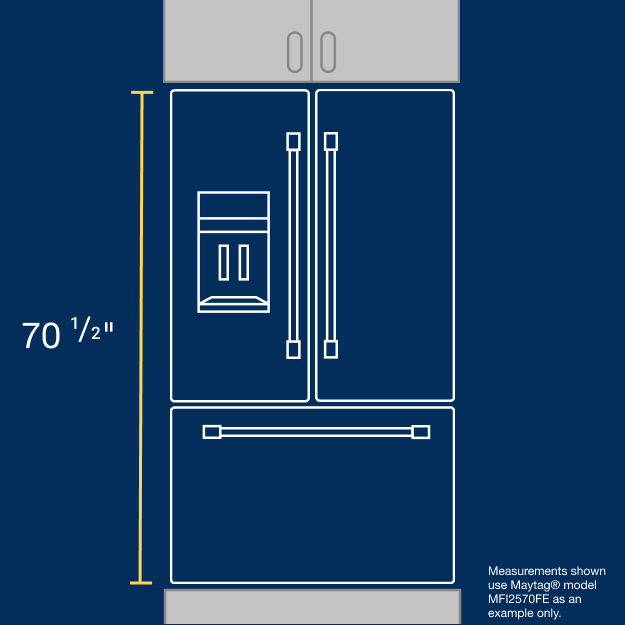
4. MEASURE REFRIGERATOR HEIGHT
If you have cabinetry, a soffit or a wall cutout above the refrigerator space, measure from the floor to the lowest point of the overhead obstruction. Be sure to account for any added height from top door hinges or hinge covers so the refrigerator fits comfortably within the available vertical space.
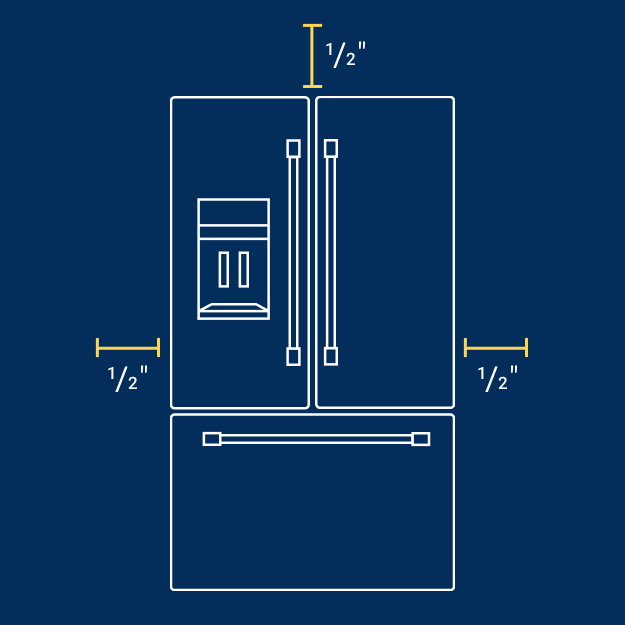
5. ADD SOME BREATHING ROOM
Add a little extra space around your refrigerator to allow for proper ventilation and smooth day-to-day use. Adequate clearance helps your refrigerator cool properly and helps prevent heat from building up.
Front:
Measure the space in front of the refrigerator to ensure doors and drawers can open fully without hitting walls, cabinets or nearby appliances.
Back:
Measure from the wall to the back of the refrigerator and leave at least 1 inch of space to allow for airflow and connections.
Sides:
Measure the width of the opening and leave at least ½ inch of clearance on each side so the refrigerator can be installed easily and ventilate properly.

6. MAP OUT A PATH FOR THE REFRIGERATOR
It fits your needs and fits your space, but how’s it getting there? From your home entrance, through each hall and doorway, measure the width of those spaces to ensure the unit will make it through—especially if you have a large refrigerator.
If you’re planning on handling this part without professional help, read this guide on how you can try to move a refrigerator to where it needs to go.
TIGHT SQUEEZE?
You may be able to remove the refrigerator doors for extra wiggle room, depending on the refrigerator. This can help reduce the depth by around 6 inches, depending on the model.

WHAT SIZE FRIDGE DO I NEED?
Finding the right fridge isn’t a one-size-fits-all experience. Consider your kitchen space and determine your household needs. Generally, 4-6 cubic feet per person is often adequate, so a household of four might do well with a 20 cubic foot fridge. If you have a larger family, refrigerator space with 25+ cubic feet is suggested. Of course, this also depends on your family’s eating habits and personal preferences.
Discover top-rated Maytag® refrigerators, offering various sizes and standout features.
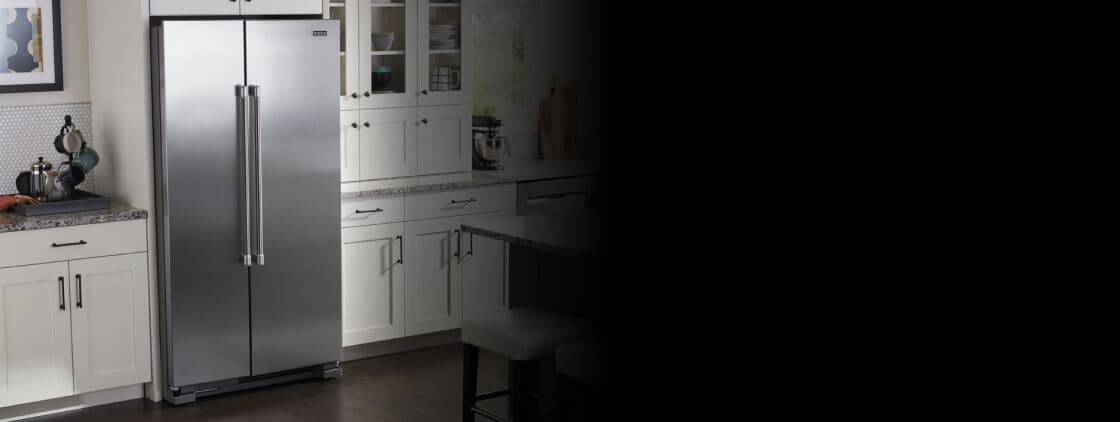
Maytag® refrigerators
Built strong to hold in the cold
Maytag® refrigerators are designed to help keep your perishables in their ideal climate
FIND YOUR NEW MAYTAG® REFRIGERATOR
Once you’ve taken measurements of your space, reference the specs of the models you are interested in online or ask a sales associate in the store. That way, you can determine if those refrigerator dimensions will be a good fit for you.
The fridge sizes guide above represents a Maytag® French door refrigerator—but can be used as a good starting point for learning how to measure for any refrigerator style. Browse the latest refrigerator trends from Maytag brand or find the best refrigerator for you.
Looking for more appliance measuring tips? This guide on stove dimensions can help you find a range that’s right for your kitchen.

GET THE 6-STEP SUMMARY
DOWNLOAD NOWSHOP POPULAR MAYTAG® REFRIGERATORS
Maytag brand has a diverse selection of refrigerator sizes and styles that can handle quick grocery stops, major food hauls and more. With features on select models like the Wide-N-Fresh™ Deli Drawer that helps keep deli items fresh, the Soft Freeze Bin that keeps foods like ice cream soft enough to scoop and bold, beautiful interiors, you can find the right fit and look for your unique refrigerator needs.


Your subscription was successful
Thank you for signing up. Keep an eye on your inbox for our next newsletter.
Sign Up for More Insights to Stay Connected
Enjoy articles like this? Get helpful guides and appliance care tips sent straight to your inbox.


