





 New Code Sent!

HOW TO MAXIMIZE OVEN SPACE & COOK A VARIETY OF DISHES
Whether you’re having friends over or meal prepping for the week, creating multiple dishes in your oven doesn't have to feel like a game of Tetris. This article covers everything you need to know about cooking in batches to help you save time and maximize your oven space. Learn how to strategically use oven racks, place pans to help ensure proper airflow and handle dishes with different temperature requirements. Also, learn how to adjust cook times so your dishes can come out just right, even when cooking multiple items at once.


WHY IS IT IMPORTANT TO ORGANIZE YOUR OVEN?
Organizing the food in your oven is essential for proper heat distribution and airflow, helping ensure your dishes cook without cold spots. Because air must circulate freely to maintain consistent temperatures, staggering pans and using specific rack positions is often helpful. For multi-rack cooking, convection technology—found on many oven makes and models today—uses a fan to circulate heated air throughout the cavity. This steady airflow allows you to cook a variety of dishes on multiple racks, simultaneously, with uniform results, as it helps eliminate the temperature fluctuations that may be found in a crowded oven with little or no airflow.
HOW TO USE YOUR OVEN TO ITS FULL CAPACITY
Putting together multiple dishes doesn’t have to feel overwhelming. Remember that you can also consult your owner’s manual to learn about your various oven settings, as well as how best to use your oven. Along with these cooking tips, you’ll have a better understanding of rack positions and hot spots to help you create meals with ease.
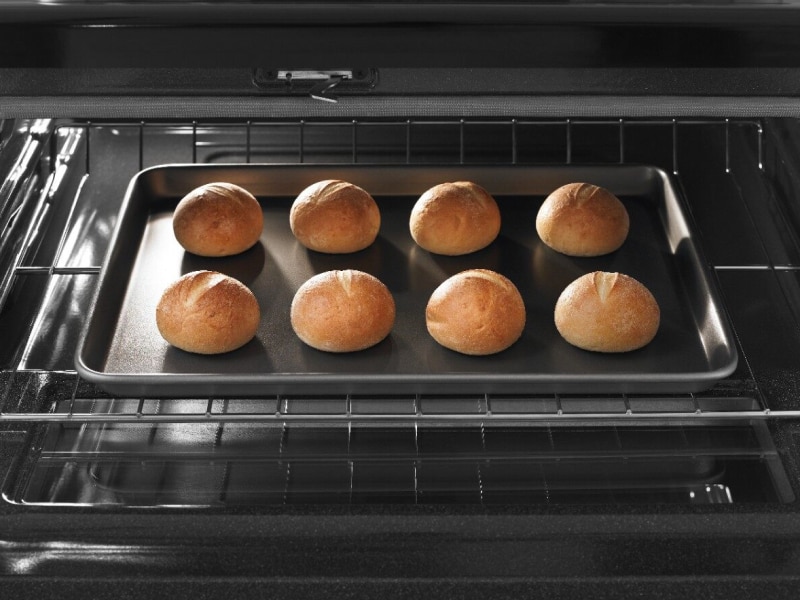
1. PLAN YOUR OVEN LOAD
Take a good look at all your recipes to make a plan. A helpful tip is to consider when you want food to be ready and work backward. Items that need time to rest should be first on your list, then you can move on to dishes that require longer cooking times, like meats.
Before you preheat, group your dishes by their required cook times, temperatures and pan sizes. This allows you to assign specific rack positions in advance and even perform a “dry run” with your cookware to ensure everything fits with enough room for air to flow. If you have a variety of temperature requirements, try to settle on an average temperature for compatible dishes. For example, if one recipe calls for 350°F and another for 375°F, setting the oven to 360°F can often accommodate both, though you should monitor for doneness and adjust timing as needed.
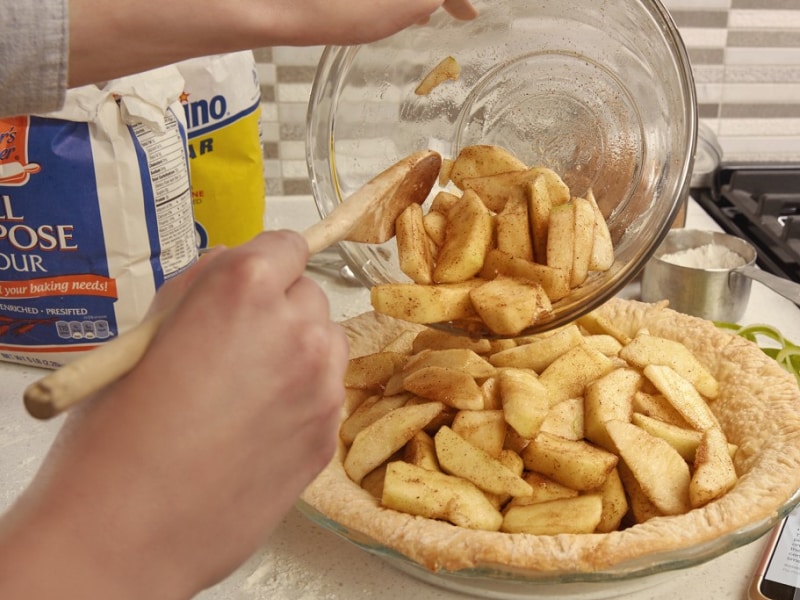
2. COOK AHEAD TO FREE UP OVEN SPACE
If you have baked items like pies on your menu, consider baking those ahead of time to free up space and make things less hectic when cooking the main dishes. Since desserts often need time to cool to room temperature and are usually served at the end of the meal, they can often be stored, reheated or chilled before being served to your guests.
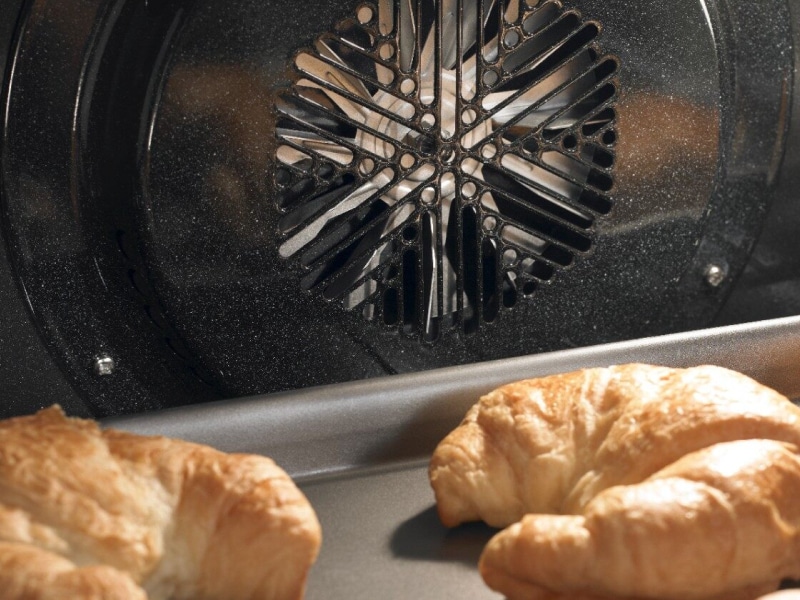
3. USE CONVECTION FOR MULTI-RACK COOKING
Convection ovens utilize several parts, such as a fan and exhaust system to circulate hot air throughout the entire cavity, which is especially useful when cooking multiple dishes across separate racks. While using traditional ovens may result in stagnant hot or cold spots when crowded, the moving air in a convection cycle helps maintain a uniform temperature from the top rack to the bottom. This consistency can help you to bake several trays of cookies or multiple casseroles at once without the heat getting “trapped” under a single pan.
Because airflow affects how heat reaches your food, you should stagger your pan placement so that no two dishes are stacked directly on top of one another; this helps ensure the air can circulate around all sides of each vessel. Additionally, since convection can help remove surface moisture, it’s important to check for browning earlier than the recipe suggests. Keep an eye on your dishes about three-quarters of the way through the minimum cook time, as the exterior often crisps and browns faster than in a conventional setting.
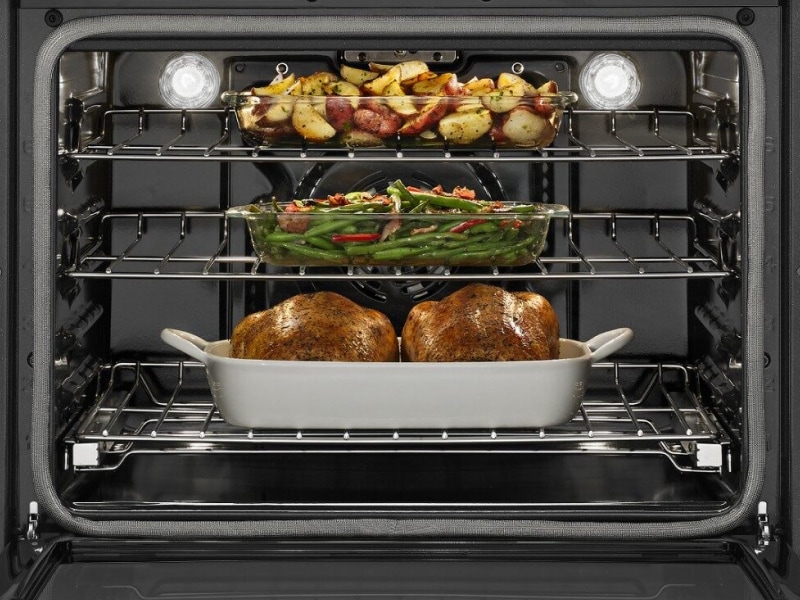
4. ADJUST FOR A CONVENTIONAL OVEN
In conventional ovens, the bottom element is the primary source of heat, while the upper heating element provides top-down heat. This can create hot spots near the bottom and the back of the oven. To help cook everything evenly, don’t overpack your conventional oven and rotate your dishes 180 degrees from front to back and swap their positions between the top and bottom racks halfway through the cooking cycle. Additionally, ensure you leave at least an inch of space between pans and the oven walls to prevent blocking heat, allowing the air to flow naturally toward the upper racks.

5. USE OTHER APPLIANCES TO OPEN UP OVEN CAPACITY
To avoid overcrowding and help ensure your main course has plenty of room for airflow, consider moving sides and appetizers to alternative heat sources. Using your microwave or cooktop lets you stagger meal timing, keeping secondary dishes warm or simmering while the oven handles high-heat roasting.
For smaller dishes such as sides or appetizers, this Maytag® Over-the-Range Microwave with Convection Mode has a feature to cook or bake your dishes using a convection setting. For dishes that require braising or if you are cooking stews or soups, utilizing a Dutch oven on your stovetop can also be a helpful addition.
6. CUT PREHEATING TIME WITH YOUR BROILER
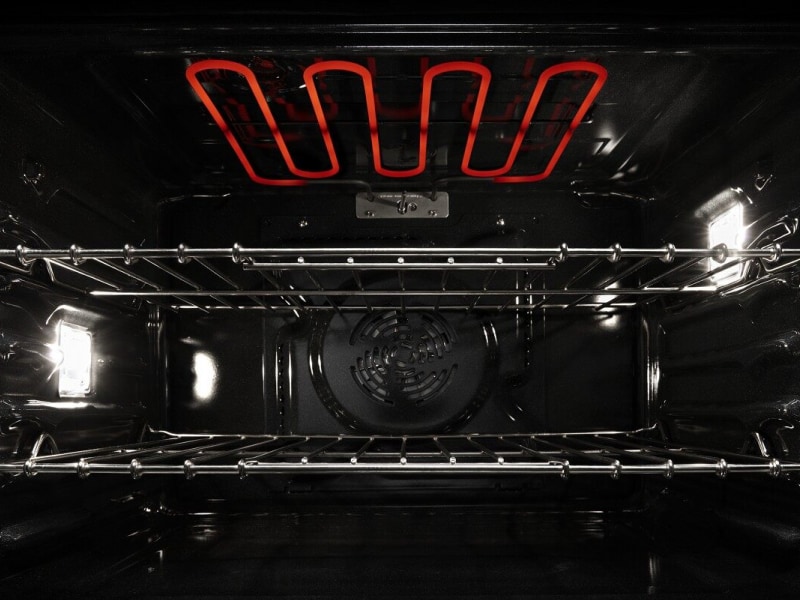
The broiler setting utilizes the heating element at the very top of the oven to deliver intense, direct infrared heat. While typically used for searing or browning the surface of a dish, this powerful element can also be used to jump-start the heating process of the entire oven cavity.
Using your broiler setting isn’t an ideal option, but it will help when trying to get dishes done in a pinch. To fast-track your preheating time, follow this easy tip: Preheat the oven to broil for 3 to 5 minutes, then choose your cook settings and desired temperature. This intense burst of heat often warms the air and oven walls much faster than the standard bake element alone, though you should always use an oven thermometer to ensure the cavity has stabilized at your target temperature before sliding in your meal.
7. CONSIDER AN AVERAGE TEMPERATURE
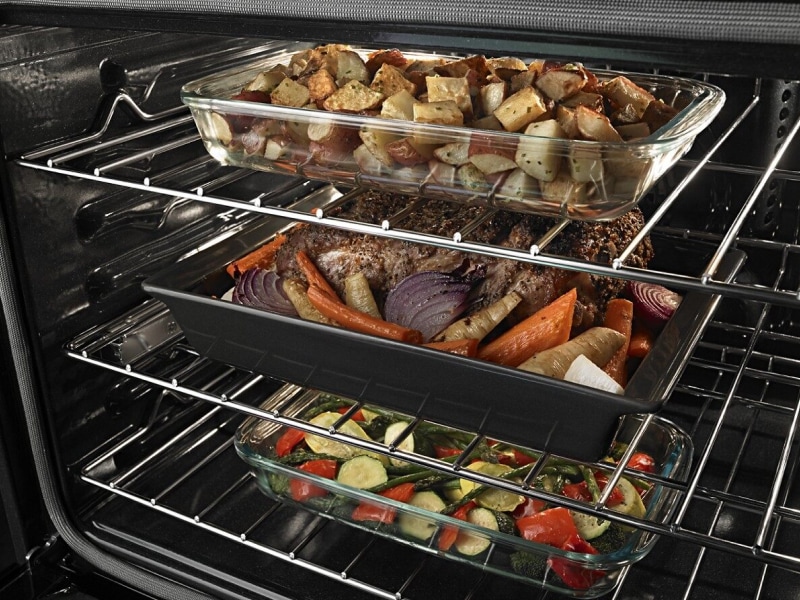
If you’re cooking different dishes at once like vegetables, entrees and baked goods, they don’t often bake at the same temperature. Set your oven to the average temperature needed for all the dishes to accommodate them in the oven at the same time. If one dish requires a temperature of 400℉ and another needs to bake at 450℉, set the temperature to 425℉.
Make sure to keep an eye on dishes if using this method and adjust times accordingly to cook food to proper temperatures, checking with a food thermometer.
This quick guide of what foods to bake, roast or broil is helpful to consider when deciding on an average temperature while keeping an eye on the food as it cooks. It may also require a particular oven rack placement depending on whether you have a convection or conventional oven.
SHOP MAYTAG® RANGES WITH AIR COOKING
Maytag® ranges provide the versatility you need to manage different textures and flavors simultaneously, helping you conquer meal prep and cook multiple dishes at once. Select Maytag® models are equipped with No Preheat Air Fry that eliminates the preheat process and cooks fried foods fast—delivering a crispy-on-the-outside, juicy-on-the-inside taste using little to no additional oil.1, Air-Powered Cooking Cycles, on select Maytag® ranges, use a powerful third heating element that circulates air throughout the oven cavity for consistent results—no matter the meal, so you can flex your skills and cook with more Air-Powered Cycles: Air Baking, Air Roast, Air Broil and Air Reheat.

OVEN SPACE FAQS
To learn more about maximizing your appliance's capacity and managing multiple items at once, explore the answers to frequently asked questions below.
HOW DO YOU ADJUST COOKING TIMES FOR MULTIPLE DISHES?
To adjust for multiple dishes, expect to add additional time. Since each item absorbs heat and can block the path of hot air, the oven may take longer to maintain its target temperature. Always check for doneness several minutes before the timer goes off.
Overcrowding the oven can be a cause of fluctuating cook times. When you use large bakeware or place pans too close together, you create a physical barrier that restricts airflow. This blocked circulation prevents heat from reaching every rack consistently, which can lead to uneven results. Additionally, using a convection setting can help cook multiple dishes by using a fan to move air throughout the cavity, whereas standard conventional cycles may require more time and manual rotation to compensate for the increased load.
In a conventional cooking cycle, heat travels from the bottom to the top of the oven. Make it a best practice to place the largest dishes that require longer cooking times on the bottom rack. You will still need to keep an eye on food for crisping and browning and rotate dishes as needed.
If you’re running into overcooked or undercooked food, you may need to consider crowding fewer dishes into your oven or calibrating your oven temperature. This can be quickly tested prior to preparing your meals by preheating your oven to 350°F with an oven thermometer centered on the middle rack. If the thermometer reads 15°F higher or lower than it should when preheating is complete, your oven may need calibration.
CAN YOU BAKE TWO DISHES AT ONCE?
You absolutely can bake two dishes at the same time. Consider keeping savory or sweet items separated, as some flavors can slightly blend together in the warm, enclosed space. Stagger your dishes so you aren’t overlapping bakeware from rack to rack. Leave room for proper air circulation between the dishes, sides and back of the oven walls.
WHY DO DISHES COOK SLOWER WHEN THERE’S MORE THAN ONE ITEM?
Cooking multiple dishes at once can lead to longer cooking times because it affects airflow in your oven. Hot air needs to circulate freely to cook food evenly, but adding more pans or trays can restrict that circulation—especially if the oven is overcrowded.
When baking sheets or dishes are placed too close together, or too close to the oven walls, hot air can’t reach the entire surface area of each dish. This can result in uneven cooking, hot spots and slower overall bake times. Large or tall dishes can also block heat and airflow from reaching other items in the oven.
To help promote even cooking and better results, allow at least 2-3 inches of space between dishes, between pans on the same rack, and between the pans and oven walls. Distributing racks evenly and avoiding obstructions—like foil covering racks or the bottom of the oven—can also help maintain proper airflow and consistent cooking performance.
HOW DO YOU KEEP FOOD WARM WHEN COOKING MULTIPLE DISHES?
Take a peek at your owner’s manual and see if your oven comes with a keep warm setting. This feature is useful for keeping food warm until it’s ready to serve. If there’s no room left in your oven, you can try warming serving plates at the lowest setting in your oven. Alternatively, you can warm serving plates or food in a warming drawer, microwave or simply insulate your food with aluminum foil until it's ready to serve.

CAN YOU COOK MULTIPLE DISHES IN A CONVECTION OVEN?
Yes, you can cook multiple dishes in a convection oven because the fan and exhaust system circulate hot air throughout the entire cavity. This helps create a uniform temperature on every rack, allowing you to bake or roast several items at once without the need to rotate pans halfway through.
The convenience of a convection oven vs. a conventional oven is the fan and exhaust system that works well for multi-rack cooking. This allows for hot air to circulate around the inside of the oven cavity so heat is more evenly distributed. For cooking multiple dishes, keep note of the cooking temperatures needed for each dish and settle for an average temperature. Keep an eye on food as it cooks as cooking times may differentiate.
SHOP MAYTAG® WALL OVENS
All you need to host a few friends and begin meal planning for the week are the right tools. Powerful built-in wall ovens from Maytag brand are available in single or double configurations to take on the heavy lifting of feeding a large crowd. Select Maytag® wall ovens feature True Convection and Fingerprint Resistant Stainless Steel to help make cooking and cleaning more effortless.
Enjoy the Keep Warm™ setting on other select Maytag® wall ovens, which uses low heat to keep food warm in your oven. With convenient features and flexible cooking capacity, Maytag® wall ovens help make it easier to plan ahead and get dinner on the table.
1. Compared to traditional deep frying
2. Air Broil and Air Reheat cycles available in App only, Appliance must be connected. WiFi & App Required. Features subject to change. Details and privacy info at maytag.com/connect.


Your subscription was successful
Thank you for signing up. Keep an eye on your inbox for our next newsletter.
Sign Up for More Insights to Stay Connected
Enjoy articles like this? Get helpful guides and appliance care tips sent straight to your inbox.

