





 New Code Sent!

COMMERCIAL LAUNDRY GUIDE FOR SHARED SPACES AND RENTALS
Designing a shared or communal laundry room for rental properties can be overwhelming if you don’t know what to look for. Commercial-grade laundry appliances can be a helpful addition to shared spaces or even residential homes that require high-grade performance.
This guide can help you learn the benefits of commercial-grade laundry for shared spaces, as well as how to choose and plan out your community laundry room. Keep reading to learn more about commercial-grade laundry and get answers to any questions you may have.


WHAT IS A COMMERCIAL-GRADE WASHER AND DRYER?
Commercial-grade laundry is built with heavy-duty materials like stainless steel drums and robust motors to handle high-volume usage. Key differences between commercial vs. residential washers and dryers often (but not always) include: high durability, large capacities, fast spin and dry times and sometimes custom wash cycles.
Certain manufacturers, like Maytag® commercial-grade laundry, may produce machines that are available for residential use. These laundry appliances may contain many of the same parts as machines found in laundromats or other commercial laundry areas, but are able to be installed in homes for residential use.

BENEFITS OF COMMERCIAL LAUNDRY FOR SHARED SPACES
Since commercial-grade laundry appliances are built with heavy-duty use in mind, they are often beneficial for rental properties. Some of these benefits include:
Built with heavy-duty parts: Commercial-grade laundry appliances use robust parts to power through multiple loads. Select Maytag® commercial-grade washing machines are equipped with a sturdy drive system to handle large loads with ease.
Engineered for durability: Commercial-grade laundry appliances often use thick, galvanized steel panels to help resist corrosion and bumps and dings that may happen. Many commercial-grade laundry machines may also come with an extensive warranty, like the Maytag® 5-year all parts and labor and 10-year limited parts warranty on the basket and motor, available on select units. 1 2
- Designed for powerful cleaning: Some units, such as select Maytag® models, have powerful features like Dual Action Agitators, which help move clothes through the water to create outstanding roll-over action, delivering a robust clean in short cycle times. Select Maytag® commercial-grade laundry machines offer ½ horsepower motor, a quad gear transmission and premium bearings to handle multiple loads a day.

CHOOSING THE BEST WASHER & DRYER FOR YOUR RENTAL PROPERTY
There are many factors to consider when choosing the best commercial laundry for shared spaces for you. You’ll want to consider what type of configuration will work best—side-by-side, stacked or all-in-one. Additionally, you’ll need to choose between top or front-load laundry and find the right capacity, as well as warranty coverage to suit your needs. Follow this guide to help you choose the best washer and dryer for your rental property.
SIDE-BY-SIDE, STACKED OR ALL-IN-ONE
Choosing the right configuration can help establish the proper flow of your laundry room. Not every configuration is always available in commercial grade. Stackable washers and dryers and all-in-one laundry machines can help save space, while side-by-side sets are also handy for the complementary features found on many models. Keep reading for more information on side-by-side, stacked and all-in-one washers and dryers. Whichever configuration you choose, be sure to carefully check your measurements beforehand.
Side-by-side washer and dryer: These appliances sit side by side, taking up more floor space but giving you more space above each machine. With a side-by-side washer and dryer, you can easily have space for folding or perhaps even a shelf above for extra laundry supplies.
Stacked washer and dryer: These machines stack, typically with the washer on the bottom and the dryer on top. They are installed vertically to help save space, making it handy to store in some closets or small areas.
Stacked laundry center: Technically one appliance, stacked laundry centers include a washer with a dryer stacked on top. Laundry centers cannot be separated and are controlled by a singular panel on the top. These appliances can often easily fit into closets or other small spaces.
- All-in-one washer and dryer: These appliances combine washers and dryers into a single appliance with a single drum, allowing you to wash and dry your clothes in the same appliance. All-in-ones can be helpful for areas lacking in space.
TOP LOAD VS. FRONT LOAD
When choosing between top load or front load washers for your rental, it's important to consider door access, installation flexibility, capacity and efficiency. Top load washers open from above so you can easily add clothes without bending down. These washers sit next to dryers and usually offer fast washing times and your choice between an agitator and an impeller. Since they do not have a sealing gasket, they are often easy to clean and maintain.
Front load washers have a door on the front of the machine, pairing with a front load dryer and can often stack to save space (check model specifications to be sure). These appliances tend to be efficient because they typically use less water. While the wash times may be longer, the fast-spinning drum on the washer helps extract excess water, which may result in shorter dry times.
CHOOSING THE RIGHT CAPACITY
Consider how much your laundry appliances will be used. This will help determine what capacity you’ll need for your laundry room. Large capacity washers can typically range from 5.0 cubic feet to 5.3 cubic feet, while large capacity dryers can range from 7.0 cubic feet to 9.0 cubic feet, though some models do vary.
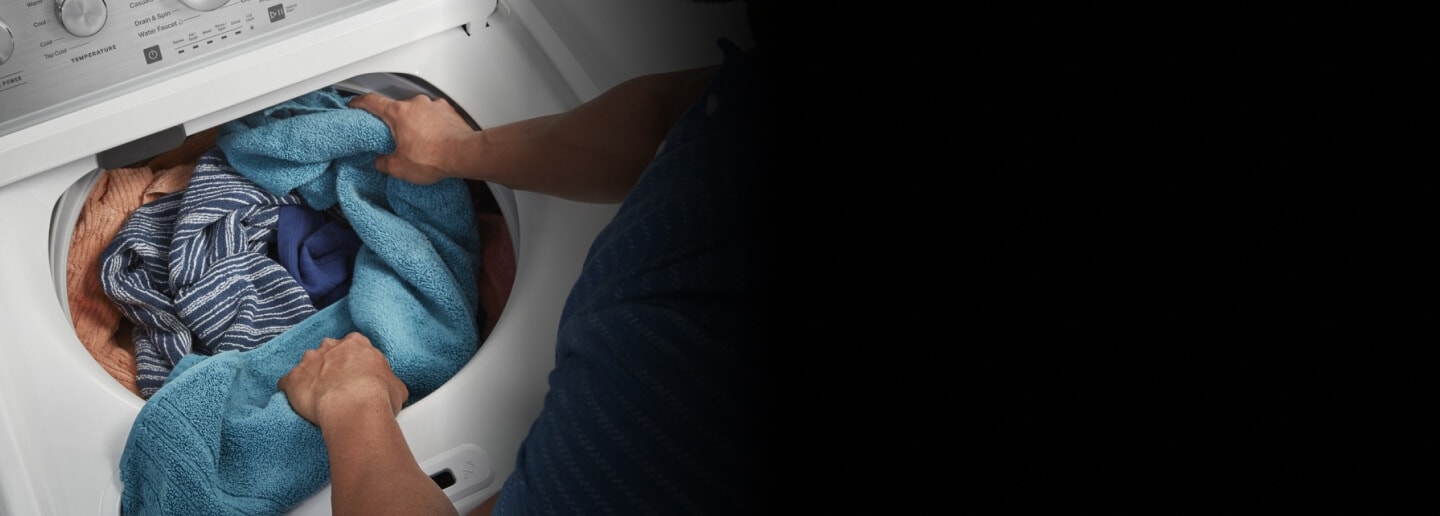
LARGE CAPACITY
TACKLE LARGE LOADS OF LAUNDRY
This Maytag® large capacity washer is large enough to handle even your largest loads of laundry with ease
CONSIDERING COMMERCIAL WASHER AND DRYER WARRANTY COVERAGE
Typical commercial washer and dryer warranty coverage lasts for about one year from the purchase date and often includes parts and labor for defects under normal use. Warranties often vary amongst different appliances and companies, so be sure to check your owner’s manual for the most up-to-date information.
Maytag® laundry appliances are covered under a 10-year limited parts warranty on the drive motor, wash basket and dryer drum.3 Select Maytag® commercial-grade laundry appliances offer a 5-year all parts & labor as well as a 10-year limited parts warranty on the basket and motor.4
SHOP MAYTAG® COMMERCIAL LAUNDRY FOR SHARED SPACES AND RENTALS
Built with commercial-grade parts like a direct drive motor and stainless steel wash basket, select Maytag® commercial-grade washers and dryers are engineered for long-lasting durability. Shop Maytag® commercial-grade washers, some of which have a Dual Action Agitator to help move clothes through the water, delivering a robust clean.

PLANNING AND SETTING UP YOUR SHARED LAUNDRY ROOM
It's important to plan the layout of your laundry room to ensure proper traffic flow and to be sure the appliances will fit. Consider your room size as you plan and if you’ll need stacked appliances to accommodate the size. Then, check that you have the necessary power source and plan where you’ll vent your appliances. Keep reading for more information on how to set up your shared laundry room.
SIZING THE ROOM FOR WASHERS, DRYERS & CIRCULATION
You’ll first want to consider the size of your community laundry room. Make sure there’s a natural flow from washers to dryers to minimize walking back and forth and that there is enough space for the doors on each appliance to fully open and close. Keep a wide walkway for users to comfortably walk through with their laundry. A cramped, hard-to-navigate laundry room can be uninviting for laundry users.
UTILITY, VENTING AND NOISE CONSIDERATIONS
Before installing your appliances, you’ll want to make sure your space is ready. Washers generally require a three-pronged 110-volt outlet and hot and cold water valves within 4 feet of the washer. Electric dryers generally need a three- or four-pronged, 220-volt outlet, as well as a ventilation port. Gas dryers usually need a three-pronged, 110-volt outlet, a ventilation port and a gas shut-off valve right behind the dryer. Check the specs of your model before purchasing, to be sure on hookup requirements. If you can, try placing your shared laundry room in the basement or first floor to help minimize noise.
ESTABLISH COMMUNITY LAUNDRY ROOM RULES
Once your laundry room is set up, be sure to establish laundry rules and etiquette to help keep it clean and accessible. Add instructions on where to place the detergent and how to remove and clean the lint trap. It may also be helpful to include a laundry room rules sign with reminders on removing loads in a timely manner, wiping spills as they occur and any other rules you may want to establish.

COMMERCIAL LAUNDRY GUIDE FAQS
Get answers to commonly asked questions about commercial-grade laundry appliances.
CAN YOU USE A RESIDENTIAL WASHER IN A SHARED LAUNDRY ROOM?
In general, it is not recommended to use a standard residential washer in a shared laundry room, as residential washers are not generally made to handle the same amount of high-volume usage as commercial-grade laundry machines are. You’ll want to consider how many people are using the shared laundry room before determining what type of laundry machine to buy.
HOW MUCH DETERGENT SHOULD BE USED IN A COMMERCIAL WASHING MACHINE?
You should refer to your washer’s use and care guide or detergent instructions to help determine how much detergent you need. Larger loads, heavily soiled clothes and laundry rooms with hard water may generally need more detergent.
If you don’t use enough detergent, your clothes may not be as fresh and clean as you’d like. However, if you use too much detergent, your washer may not be able to rinse clothes properly, leading to clothes with a waxy finish, splotches or rough patches.
ARE ENERGY-EFFICIENT COMMERCIAL WASHERS WORTH THE INVESTMENT?
Energy-efficient commercial washers can be helpful in reducing water and energy consumption, thereby helping to reduce your utility bills. You’ll want to compare the initial upfront cost of energy-efficient commercial washers with the savings you’ll gain from lower utility bills to help make your decision.
HOW TO MAINTAIN YOUR RENTAL’S WASHER AND DRYER
Establishing a regular maintenance routine can help maintain your rental’s washer and dryer. You should also keep track of repairs and cycle counts to help identify any patterns or problems before they become a major issue. Read more about how to maintain a washer and dryer, or follow below for a quick guide on when to service your machine.
Daily: Clean out lint traps and filters.
Monthly: Inspect hoses and seals for wear and leaks and clean machines.
- As needed: Schedule professional servicing.
EXPLORE MAYTAG® WASHER AND DRYER SETS
See how power and durability work together when you purchase a Maytag® washer and dryer set. Select Maytag® washers offer Extra Power to boost stain fighting on any wash cycle with an intense pre-wash and extra agitation. Shop Maytag® laundry sets and Maytag® stackable laundry for a powerful clean in every cycle.
Was this article helpful? Pass it on
EXPLORE MORE FROM MAYTAG BRAND
1. 5-yr limited parts & labor warranty plus additional 5-yr limited parts warranty on drive motors, stainless steel wash basket and dryer drum.
2. When used only in a single-family home for non-commercial purposes. Alternate warranties for commercial and other uses. See product warranty for details.
3. See product warranty for details.
4. Visit Maytag.com for warranty details.

