





 New Code Sent!

HOW TO SORT LAUNDRY: WHAT TO WASH TOGETHER OR SEPARATELY
Sorting laundry doesn’t have to be complicated, and making it a habit can help protect your clothes. Use this guide to walk through what you can wash together or should separate based on color, fabric type and weight, soil level and care instructions. Then, discover a step-by-step process for sorting laundry and get answers to common questions.

WHY SORTING LAUNDRY MATTERS
Sorting laundry isn’t always convenient, but a little extra effort can help protect your wardrobe. Separating laundry by care needs can help reduce color transfer, fading and unnecessary wear on delicate fabrics.

WHAT LAUNDRY CAN BE WASHED TOGETHER?
Laundry can often share a load when your items have compatible colors, care labels, fabric weights, soil levels, water temperatures and wash cycles. You’ll group like with like, and ultimately let the care label help make the final call. Generally, you can often wash the following items together:
| Shared Wash Cycles | Why |
|---|---|
| Like colors | Similar colors are less likely to bleed or stain other garments |
| Similar fabrics/weights | Similar weights and fabrics often share compatible cycles and settings |
| Consistent care needs | Matching care instructions help ensure proper water temperature and cycle settings |
| Similar soil levels | Separating heavily and lightly soiled items helps prevent residue transfer |
*Care labels, water temperatures and cycles should match in these groupings
GARMENTS WITH SIMILAR COLORS
You can generally wash all whites together when their care labels, water temperatures and cycles match. Do the same with light colors that are similar shades. Colorfast garments can share a load with similar colors, but separate new or deeply colored pieces until you know they won’t bleed.
DELICATES AND LIGHTWEIGHT GARMENTS
Delicate and lightweight garments can generally share a load when their colors, care labels, water temperatures and cycle requirements line up, but there are some exceptions. Avoid mixing delicate fabrics like cashmere with lace, or knitwear with poly, because it could cause them to lose their shape.

WHAT LAUNDRY SHOULD BE WASHED SEPARATELY?
Separating your laundry is best when items have conflicting needs. Big differences in fabric weight, color-transfer risk, soil level, water temperature or required cycle can leave one item less clean—or less cared for—than it should be. When in doubt, your garment’s care label should get the final say.
| Separate Wash Cycles | Why |
|---|---|
| Jeans & delicates | Heavy denim can stress or snag delicate fabrics |
| Deep colors & whites/lights | Dye may transfer |
| Heavily & lightly soiled items | Soil and residue may transfer |
| Incompatible care needs | Garments may not get the care they require |
JEANS AND DELICATE FABRICS
Heavy jeans and denim can be rough on lightweight, delicate or snag-prone fabrics. Because fabric weight and cycle needs can differ, separate denim when it calls for a sturdier cycle than your delicates.
DEEPLY COLORED GARMENTS AND WHITES OR LIGHTS
Dark or deeply colored garments can release excess dye, especially when they’re new. Keep them away from whites and lights until you understand their color-transfer risk. Generally, sort by shade and follow each garment’s care label for water temperature and cycle guidance.
HEAVILY SOILED AND LIGHTLY SOILED
Heavily soiled, greasy or muddy items may require pretreatment, a higher soil-level setting or a different water temperature and cycle. Washing them separately helps keep loosened soil and residue from settling onto lightly soiled laundry. Choose settings based on both soil level and fabric care.
TOWELS, SHEETS AND CLOTHES
Towels, sheets and clothes may be able to share a load in a pinch, but it’s ideal to sort them for a thorough clean that helps protect sheet and clothing fabrics. Towels are heavy, highly absorbent lint-givers and often need hotter, longer cycles, while sheets and clothes may require gentler care.
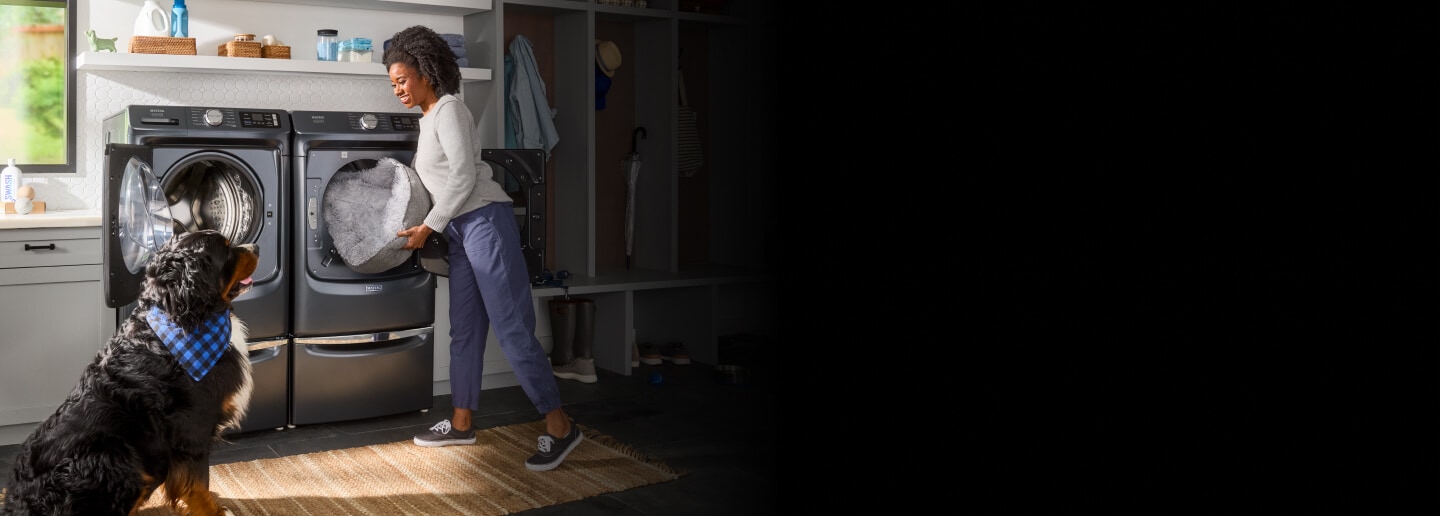
FRONT LOAD PET PRO WASHER
CONQUER PET HAIR LIKE A PRO
The Maytag® front load washer with Pet Pro Option unleashes additional water and a deep rinse to help remove pet hair
LAUNDRY SORTING STEPS
How much you sort your laundry depends on your household, wardrobe and how much time you have. A good place to start is checking care labels, then sorting by item type, color and soil level. Follow these five steps for a well-rounded approach to sorting your laundry.

1. CHECK CARE LABEL
Get familiar with the care label on your clothes. Make sure each item is washer-safe, then follow the most conservative instructions in the load. When in doubt, choose the coolest recommended water temperature and gentlest cycle to help protect the most delicate fabrics in the load from unnecessary wear.

2. SORT BY GENERAL ITEM TYPE
Before you sort by color, separate clothes by fabric and weight. Heavy fabrics like denim can rub against delicate materials like wool, causing wear over time. Start with three piles: heavy fabrics, non-denim daily wear items and delicates.

3. CHECK FOR COLOR TRANSFER RISK
Once you’ve sorted by fabric type, separate clothes by color to help prevent dye transfer. For extra protection, sort into four groups: whites, lights, brights and darks. This added step can help keep colors from bleeding onto lighter fabrics.
For instance, you might create piles like whites (no patterns), lights (whites with prints, pale yellow or other pale tones), brights (bright colors like red, orange, green, etc.) and darks (browns and blacks or purples and blues).

4. SEPARATE HEAVILY SOILED OR STAINED LAUNDRY
Set heavily soiled or stained items aside and pretreat stains based on the fabric and stain type. Pretreating stains may be easier if you leverage unique washer features—like the Built-In Water Faucet on select Maytag® washers—that add convenience to the process.
Wash these items separately to help keep dirt and stains from transferring. Before you toss clothes in the dryer, check that stains are gone, as the dryer heat can set them and make them harder to get out.

5. PREPARE ITEMS AND LOAD THE WASHER
Give each item a quick once-over before it goes in. Empty pockets, fasten zippers and turn embellished clothes inside out. Place any delicate items in a mesh bag for extra protection.


SORTING LAUNDRY FAQS
Sorting laundry can become second nature once you’re in the habit. If you’re still feeling uncertain, get answers to some common laundry sorting questions below.
It’s best to wash baby clothes separately, especially because they’re often more delicate than adult clothing and often need pretreating for stains. Create a baby-only load—sorted by fabric and color—and always follow each garment’s care label.
If clothes are heavily soiled with pet hair, it might be a good idea to wash them separately from unaffected clothing. This can help prevent hair from transferring to other clothes in the load. Select Maytag® washers such as this model are specially designed to handle pet hair and feature the Pet Pro Option, which unleashes additional water and a deep rinse to assist the Pet Pro Filter, which lifts and captures pet hair from clothes.
Cleaning rags (especially microfiber towels) should always be washed on their own. This can help avoid transferring lint, hair or dust from towels to your other clothes. You may also consider separating heavily soiled microfiber towels from lightly soiled rags to help prevent dirt from transferring.
Conquer whatever’s waiting in your laundry basket with a front or top load washer from Maytag brand. Do laundry on your time with the 24 Hr Fresh Hold® Option on select Maytag® models that keeps clean clothes smelling fresh in the washer with an internal fan and intermittent tumbling that circulates air through clothes for up to 24 hours after the wash cycle ends.
EXPLORE MAYTAG® WASHERS


Your subscription was successful
Thank you for signing up. Keep an eye on your inbox for our next newsletter.
Sign Up for More Insights to Stay Connected
Enjoy articles like this? Get helpful guides and appliance care tips sent straight to your inbox.

