





 New Code Sent!

WASHING MACHINE WON'T FILL WITH WATER? WHAT TO CHECK
If your washer is not filling with water, there may be several possible reasons—from closed supply valves to kinked hoses or a drain hose installed incorrectly. Many of these issues can be narrowed down with a few simple checks. This guide walks through fill symptoms, troubleshooting steps and next steps to help get laundry day back on track.


IS YOUR WASHER ACTUALLY NOT FILLING?
Before troubleshooting, confirm the washer is truly not filling. High-efficiency washers use less water and pause to sense the load before filling, which can look like the washer isn't doing anything. Listen for water sounds, check whether clothes are getting wet and watch for sensing pauses that resume on their own. If you’re concerned about a top load washing machine not filling with water, be aware that on some cycles, there may be only a few inches of water in the bottom of the washer tub. If you’re worried about your front load washing machine not filling with water, the drum may not look completely full, even during a normal cycle.
Auto Sensing on a washing machine, when the machine senses how much water to use, can help explain why water levels often vary by load. Understanding washing machine water usage can also help set expectations. A drain hose that isn't installed properly or supply lines that aren't fully open can also impact how a washer fills with water.

WASHER FILL SYMPTOMS AND WHAT THEY MEAN
Different fill symptoms can point to different causes. Use the table below to help narrow down what might be happening and where to look next.
| Symptom | What to check next |
|---|---|
| Washer not filling with water | Cycle settings, lid or door latch, supply valves, inlet hoses, inlet screens |
| Washer fills slowly | Supply valves, kinked hoses, inlet screens, household water pressure |
| Washer fills with water then stops | Paused cycle, soak or delay option, sensing pauses, lid or door lock, error codes |
| Washer fills and drains at the same time | Drain hose height and insertion, drain hose clogs or kinks |
The quickest way to try and help narrow down the cause is to match the symptom to the right starting point, then follow the troubleshooting steps in the next section.
WHAT IF NO WATER ENTERS THE WASHER?
If water is not coming in a washing machine, start with the basics. A cycle that hasn't started, an unlatched lid or door, closed water supply valves, kinked hoses and clogged inlet screens are all possible causes. Fill and drain hoses may get obstructed, bent, harmed or pulled loose, which can disrupt water delivery.
WHAT IF THE WASHER FILLS SLOWLY?
A washing machine not getting enough water can be frustrating. Inspect inlet hoses from end to end, looking for any kinks, crimps or flattened areas that might slow water down. Make sure each hose is tightly secured at both the wall connection and the washer—if a fitting is loose, air can slip into the line and lower the pressure that carries water into the tub. Partly open supply valves and sediment in the inlet screens can also slow the fill.

WHAT IF THE WASHER FILLS WITH WATER, THEN STOPS?
If your washer fills with water then stops, there may be several possible reasons. The cycle may be paused, or a soak or delay option may be active. Sensing pauses are often normal for a washer, and typically resume on their own. A lid or door that opened or didn't lock can also halt the cycle. If a code appears on the display, check the manual for the specific meaning. If it truly won’t resume after all of these checks, and clothes are still sitting in water, it’s best to call professional help.
WHAT IF THE WASHER FILLS AND DRAINS AT THE SAME TIME?
When water enters the washer and drains away simultaneously, this might be caused by siphoning. It’s a good idea to check your washer’s drain hose and drainpipe. A drain hose placed too far into the drainpipe can cause drained water to siphon back into the washer, which disrupts the draining/filling process. This can cause water to drain as it enters and keep the washer filling continuously. On some front load washers, for instance, the drain hose should not extend more than 4.5" (113 mm) into the drainpipe and the drainpipe should also be installed no less than 39" from the floor. Check your user manual for the specific instructions and measurements for your model and adjust the hose as directed.


HOW TO TROUBLESHOOT A WASHER THAT WON'T FILL WITH WATER
If you're wondering, “why won't my washer fill?” the following checks go from quick control checks to drain-hose placement. Work through them in order and follow your model's user guide for specific help with troubleshooting your washing machine.

1. CHECK THE CYCLE, CONTROLS AND LID OR DOOR
Start with the simplest checks. First, be sure that your washer isn’t simply pausing as it senses the load size using features like Auto Sensing. Confirm that delay start isn't active—a delayed start time can make it look like the washer isn't filling when it's simply waiting to begin. Check whether the cycle is paused and make sure the control lock isn't engaged. On both top-load and front-load models, a lid or door that isn't fully closed or latched can stop the washer from filling. Close it firmly and listen for the click of the latch.

2. CHECK THE HOUSEHOLD WATER SUPPLY
Confirm that the hot and cold supply valves behind the washer are opened all the way. The washer needs both valves turned on to fill—closing either valve stops water from reaching the machine. Confirm that household water is available at other faucets. In cold weather, frozen pipes can also stop water from reaching the washer. If the valves are open but water isn't flowing, contact a plumber to check the household water supply.

3. INSPECT THE INLET HOSES
Look for visible kinks, crushing or leaks along the full length of the inlet hoses. Fill and drain hoses may get obstructed, bent, harmed or pulled loose, which can create water supply problems. This is especially important after the washer has been moved. Make sure each hose is tightly secured at both ends—a loose fitting connection can let air into the line and lower the water pressure during the fill cycle. Follow your model's specific owner’s manual instructions when adjusting your various hoses.

4. CHECK THE INLET SCREENS
Sometimes, after an extended period of use, sediment can collect in your mesh inlet filter screens, usually located at your hose connection points on the back of the machine. The job of these screens is to catch sediment, so if it feels like your washer isn’t filling, this might be worth checking, because clogs here can be a common cause of fill issues in washers. Before you begin, consult your user care manual to be sure that you are able to check your inlet filter screens on your model. This is usually limited to checking accessible screens at your external hose connections and doesn’t require you to access internal parts of your machine, which is best left to a professional.

5. CHECK THE DRAIN HOSE PLACEMENT
If water enters and drains away, compare the drain hose height and insertion against the model's washing machine installation instructions. A drain hose placed at the wrong height and depth into the drain pipe can impact how a washer fills with water. Clogged or kinked hoses are also potential causes of drainage issues.

WHAT TO DO IF THE WASHER STILL WON'T FILL
If the washer still won't fill after the checks above, the next steps involve model-specific guidance. Use your owner’s manual to look up error codes and reset procedures, and consider scheduling service if the issue persists.
CHECK THE MANUAL FOR ERROR CODES
Use your owner’s manual to look up any displayed error codes. If you own a Maytag® appliance, you can look up your Maytag® appliance manual online by model number. Or contact Maytag® service and support for more help with troubleshooting or to schedule service for your appliance.
RESET THE WASHER
A washer reset can sometimes help resolve some error codes and power surges. A simple reset method often involves turning the power off, waiting a few minutes, and then plugging the machine back in and turning it back on. This may vary by model however, so be sure to check your owner’s manual for specific directions. A reset won't resolve a water supply or drainage issue however. If the water supply is off or the drain hose is siphoning, a reset won't change that.
SCHEDULE SERVICE
If the washer still won't fill after all the checks and a reset, it may be time to schedule service. Persistent no-fill behavior, recurring error codes, leaks and suspected internal component issues are all reasons to stop homeowner troubleshooting and call in a pro. If you have a Maytag® washer, contact Maytag brand to schedule service with a trained technician.

FAQS REGARDING: WHY IS MY WASHER NOT FILLING WITH WATER?
After the basic checks, questions about “why won’t my washer fill?” often come up. The FAQs below address issues like water usage, fill levels and pressure requirements.
Many washing machines use Auto Sensing to adjust the water levels for each load on select models. However, select top-load washers offer Deep Fill settings for more water when desired. Higher-water cycles like Bulky or Bedding and an extra rinse option can often also add water. Select Maytag® top-load washers include the Deep Fill Option, which gives you more water when you want it. The extra water works with robust wash action to saturate loads and help loosen stains.
Yes, a top load washing machine not filling with water all the way to the top is normal. Many top-load cycles fill well below the rim and water levels vary by cycle and load size. As long as clothes are getting wet and moving freely, the water level is likely working as designed for that cycle.
Yes, a washing machine needs a minimum water pressure to fill properly. The specific pressure range is often listed in the washer's installation instructions. Low household water pressure can cause slow fills or trigger long-fill codes on select models. Check your user manual for exact details and consult a plumber if your home’s water pressure is not where it should be.
EXPLORE MAYTAG® WASHING MACHINES
When it comes to laundry day, dependable appliances make all the difference. Select Maytag® washing machines include Auto Sensing, which adjusts the water levels for each load to provide efficient cleaning.
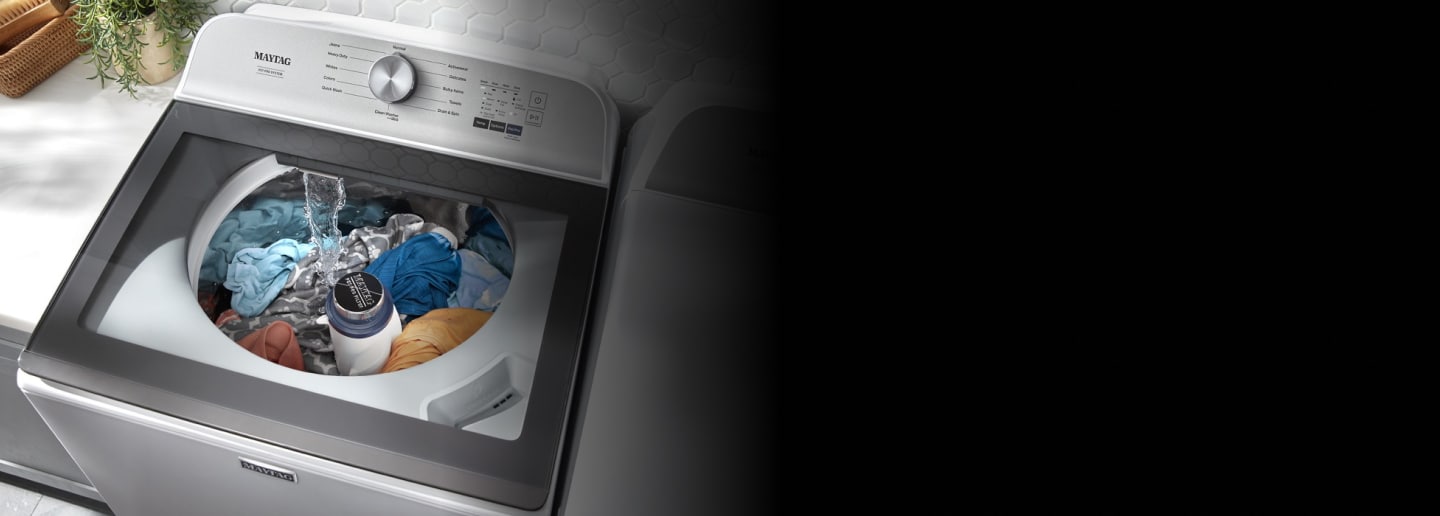
Maytag® washing machines
Designed for performance, control and convenience
Maytag® washing machines take stain fighting seriously with cycles built to push the limits of power
This article includes AI-generated content that our human team has reviewed and edited to ensure quality.


Your subscription was successful
Thank you for signing up. Keep an eye on your inbox for our next newsletter.
Sign Up for More Insights to Stay Connected
Enjoy articles like this? Get helpful guides and appliance care tips sent straight to your inbox.

