





 New Code Sent!

CONVECTION OVENS VS. MICROWAVES: KEY DIFFERENCES
Preparing meals at home can be a rewarding experience for you and your family. However, it can also be time-consuming and challenging, especially if you don't have the right appliances.
Two common kitchen appliances are convection ovens and microwaves, each with its own unique set of benefits. Use this article to explore the differences between convection ovens and microwaves to help you choose the right appliance for your cooking needs.


WHAT’S THE DIFFERENCE BETWEEN A MICROWAVE AND CONVECTION OVEN?
When it comes to choosing between a microwave and a convection oven, there are a few key differences to consider. The main differences lie in capacity, heating methods, preheating options and cooking capabilities. When analyzing convection ovens vs. microwaves, it's important to consider the following factors:

CAPACITY
One of the main differences between microwaves and convection ovens is their size and capacity. Microwaves are generally compact and available in various sizes, from countertop models to over-the-range models. Typically, microwave capacities range between 0.5-2.2 cu. ft. Learn more about standard microwave sizes to find the best fit for your kitchen.
Convection ovens come in a range of sizes, from compact countertop models to the traditional larger models able to accommodate multiple dishes at once. Depending on whether you have a single or double convection wall oven, capacity can generally range from about 2-10 cu. ft.
Your cooking needs and space availability should be considered when deciding between a microwave and convection oven. Because microwaves are a smaller appliance, they can only cook smaller portions of leftovers or frozen food at one time, while standard convection ovens can cook multiple dishes at once. You should also ensure, if choosing a full-size convection oven, that the appliance you pick fits the dimensions of your stove or built-in oven space.

HEATING METHODS
The heating methods for a convection oven and a microwave are vastly different. Microwaves use electromagnetic waves to heat food, while convection ovens use a fan and heating element to circulate hot air around the oven cavity.
Microwaves often offer different power levels and settings to help cook or reheat food, while convection ovens have the ability to bake, roast and broil food with the option of convection cooking for fast and even cooking across multiple racks. The different heating methods often create different results in the texture of your food. Convection ovens use various settings to create crispy, browned skin on chicken, fluffy and moist cakes and juicy roasts, while conventional microwaves typically simply just heat the food through without any surface browning or crisping.

NEED HELP FINDING A NEW MICROWAVE?

PREHEATING OPTIONS
Before you can bake, roast or broil in a convection oven, you have to preheat the oven’s interior. Preheating a convection oven allows you to select your cooking temperature and allow the oven to reach that temperature before you begin cooking. This does, however, affect the time it takes to achieve a finished product.
Standard microwaves don’t require preheating before use, and cooking temperatures are determined by the setting and power level you select.

COOKING CAPABILITIES
Microwaves and convection ovens both have unique cooking capabilities. Convection ovens provide a wide range of cooking options, including baking, roasting, broiling and grilling to help you prepare large portions or multiple dishes at once. Select models also offer additional cooking options, such as dehydrating and air frying, depending on the model. Microwaves are ideal for reheating smaller meals or quickly cooking popcorn, mug-cake and frozen meals.

POWER SOURCE
One key difference between convection ovens and microwaves is their power source. While both appliances require electricity to function, a gas convection oven can use gas as a fuel source to heat food and microwaves rely entirely on electricity. This is an important factor to consider when choosing between the two appliances, especially if you have a gas hookup in your kitchen.
Because these appliances use different heating elements, they also have varying levels of energy usage. Convection ovens typically use more energy as they require power for longer cook times. And since microwaves typically heat your food quickly and without preheating, you’re likely to use less energy overall when preparing a meal in the microwave compared to a convection oven.
CONVECTION OVEN VS. MICROWAVE COMPARISON CHART
Use the chart below to quickly compare convection ovens vs. microwaves.
| FEATURES AND SPECIFICATIONS | CONVECTION OVEN | STANDARD MICROWAVE |
|---|---|---|
| CAPACITY | 2-10 cu. ft.* | 0.5-2.2 cu. ft.* |
| HEATING METHOD | Fan and heating element | Electromagnetic waves |
| PREHEATING | Yes | No |
| COOKING CAPABILITIES | Baking, roasting, broiling, grilling, air frying | Reheating, defrosting, popcorn, steaming |
| POWER SOURCE | Gas or electric | Electric |
* Numbers are generic ranges, some models may vary
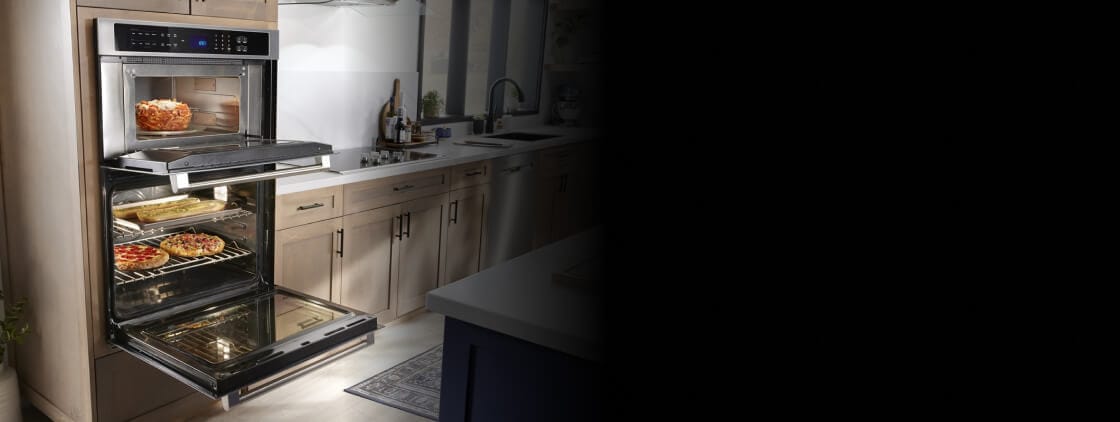
Maytag® wall ovens
WHERE POWER MEETS PRECISION
Get dinner done quicker with features on select Maytag® wall ovens that deliver serious cooking power
HOW DO CONVECTION MICROWAVES COMPARE WITH CONVECTION OVENS?
Select microwaves offer convection cooking capabilities, combining the features of both a convection oven and a microwave. Because of this expanded cooking capability, a convection microwave can cook food similar to an oven, just in smaller portions due to the smaller size of the appliance.
SHOP MAYTAG® WALL OVENS
Maytag® wall ovens are designed for performance, durability and precision. Explore select models with features like No Preheat Air Fry that eliminate the preheat process and cook fried foods fast—delivering a crispy-on-the-outside, juicy-on-the-inside taste using little to no additional oil,1 or True Convection With Fan & Third Element that uses a powerful third heating element and a sturdy fan to circulate even temperatures for more consistent roasting and baking.


CONVECTION OVEN VS. MICROWAVE FAQS
If you’re still not sure whether to choose a convection oven or a microwave to get dinner on the table, explore the frequently asked questions below for help deciding.
CAN A CONVECTION OVEN REPLACE A MICROWAVE?
While a convection oven can supplement a microwave for many cooking tasks, it cannot completely replace it. Microwaves typically offer quick and easy reheating and cooking of certain dishes that cannot be replicated in a convection oven, like quickly reheating leftovers, cooking popcorn and defrosting frozen meats and poultry.
However, a convection oven features a wide range of cooking capabilities, including baking, roasting, broiling, grilling and preparing multiple larger dishes at once, making it a versatile appliance to have in the kitchen. A convection microwave can bridge the gap between a microwave and a convection oven, allowing you to cook smaller portions similarly to a convection oven. However, due to its smaller size, it cannot fully replace a wall oven or range if you frequently cook large dishes.
WHICH IS BETTER: A MICROWAVE OR A CONVECTION OVEN?
The answer depends on your cooking needs and preferences. If you frequently cook small, quick dishes or have limited space in your kitchen, a microwave may be the better choice. Microwaves are generally smaller and less expensive, making them a practical option for those with smaller kitchens or tighter budgets.
However, if you want more cooking capabilities, larger cooking capacity and have the space for it, a convection oven may be the better option. Convection ovens use a fan to circulate hot air, allowing for more even cooking across multiple racks. They also have the ability to toast, roast, broil and bake, making them a more versatile choice. Also, convection ovens have the ability to cook at high temperatures, which is ideal for baking and cooking certain dishes.
Itʼs important to consider factors such as size, heating methods, preheating options and cooking capabilities when deciding. Many people opt to have both in their kitchens, giving them a wide range of options when it comes to mealtime.
EXPLORE MAYTAG® CONVECTION OVENS AND MICROWAVES
Maytag brand has the convection ovens and microwaves to help you streamline your mealtime routine. Explore Maytag® microwaves with the Dual Crisp Feature that creates crispy results with an extended cycle that takes on everything from soggy pizza slices to frozen fries. Select Maytag® ranges with convection capabilities feature True Convection with Third Element, which uses a powerful third heating element and a sturdy fan to circulate even temperatures for faster baking and roasting.
1. Compared to traditional deep frying.
2. Compared to traditional thermal-bake ovens.


Your subscription was successful
Thank you for signing up. Keep an eye on your inbox for our next newsletter.
Sign Up for More Insights to Stay Connected
Enjoy articles like this? Get helpful guides and appliance care tips sent straight to your inbox.

