





 New Code Sent!

WHAT IS A GARAGE-READY REFRIGERATOR?
A garage-ready refrigerator is designed to maintain consistent cooling in non-climate-controlled spaces where temperatures can vary widely, such as garages or basements. These models are often built with controls calibrated for a wider ambient temperature range than typical indoor appliances, helping protect both fresh and frozen food despite winter lows and summer highs.
Keep reading to learn more about garage-ready refrigerators vs. standard refrigerators, where you can place each type and other refrigeration considerations.

HOW DOES A GARAGE-READY REFRIGERATOR WORK?
A garage-ready refrigerator is designed to operate in non climate-controlled conditions while maintaining a safe internal temperature. These appliances typically have a wider ambient temperature range than typical indoor appliances, operating in near-freezing winter lows to warm summer highs.
Certain garage-ready models may have a dedicated “Garage Mode” setting on the temperature control, which will only need to be activated within certain temperature ranges. Exact ambient temperature ranges may vary. Read your Owner’s Manual for exact temperatures and Garage Mode instructions.


WHAT’S THE DIFFERENCE BETWEEN A GARAGE-READY FRIDGE AND A REGULAR FRIDGE?
A garage-ready refrigerator is built to handle fluctuating temperatures, while regular refrigerators are designed for indoor, climate-controlled environments. When in Garage Mode, garage-ready refrigerators can typically handle temperatures between 38° and 110°F, although exact temperatures may vary between models.
Using a non-garage-ready refrigerator in a garage may lead to performance issues. In the heat, regular refrigerators may run excessively, which can increase energy consumption, stress components and even cause the refrigerator to not maintain the correct internal temperature. In the cold, a traditional refrigerator may cycle less or not at all. The colder air surrounding the refrigerator may mask the need for cooling, which can cause the freezer to warm and potentially thaw.

CAN YOU USE A GARAGE-READY REFRIGERATOR INSIDE THE HOUSE?
Yes, you can use most garage-ready refrigerators indoors. While garage-ready refrigerators are designed to be able to withstand more extreme temperature fluctuations, most models can also easily function in an average, indoor, climate-controlled environment. Check your specific model’s user manual to be sure.

CAN A REGULAR REFRIGERATOR BE USED IN A GARAGE?
It is not recommended to use a regular refrigerator in a garage, as standard, non-garage-ready refrigerators are intended for indoor, climate-controlled environments. Using a standard refrigerator in a garage can lead to unpredictable temperatures and performance challenges.
You may also run into increased energy consumption, as hot weather can cause a standard refrigerator to run excessively and stress components. This may also cause your refrigerator to not maintain safe food temperatures. If you want to place a refrigerator in a garage, it's important to use a garage-ready refrigerator that can adapt to fluctuating temperatures.

WHAT TO CONSIDER BEFORE USING A GARAGE-READY REFRIGERATOR
Before using a garage-ready refrigerator, you’ll want to consider the room temperature range as well as where you’ll place the appliance for the proper amount of airflow. Keep reading to learn more about temperature ranges and ideal placements for garage-ready refrigerators.
TEMPERATURE RANGE AND MANUFACTURER GUIDANCE
If you’re using a garage-ready refrigerator, you’ll typically want the room’s temperature to be between 38° and 110°F. Storing a garage-ready refrigerator outside of this range (or using a regular refrigerator in a non-climate-controlled room) may cause performance issues. In colder conditions, the refrigerator may warm up and food could begin to thaw, while in hotter environments, the appliance may have to work harder, leading to increased energy use. Be sure to check your owner’s manual for information on your specific model, as temperature ranges may vary.
PLACEMENT, AIRFLOW AND EVERYDAY CONDITIONS
You’ll want to measure the height, width and depth of your refrigerator as well as the space it's going in to ensure your appliance will fit. Make sure to leave at least ½ inch of breathing room between each side of the refrigerator and one inch between the refrigerator and the back of the wall.
You’ll also want to make sure your refrigerator is level. If needed, you can likely use a level and a wrench to raise or lower the legs of your refrigerator, depending on the model. Refer to your owner’s manual for instructions on how to level your refrigerator.
ONGOING CARE FOR A GARAGE-READY REFRIGERATOR
Routine care can help your refrigerator maintain its performance. This may include cleaning, monitoring temperature settings and managing humidity and condensation.
CLEANING AND UPKEEP: Be sure to keep the area around the refrigerator clean and unobstructed. Clean the door gaskets and cabinet surfaces as needed to help maintain a tight seal on the refrigerator. You will also want to clean the interior shelves and bins as needed to help get rid of any odors. Vacuum or brush the condenser coils as directed in the owner’s manual to help support sufficient heat exchange.
MONITORING TEMPERATURE SETTINGS: Keep your refrigerator at its recommended temperature setting—typically around 37°F for fresh food and 0°F for the freezer. Check your owner’s manual for specific instructions. Avoid overpacking your refrigerator to help maintain airflow around the shelves, vents and sensors and support balanced cooling.
- MANAGING HUMIDITY AND CONDENSATION: If you live in a humid environment, try to minimize prolonged door openings to help reduce moisture from entering the refrigerator. Regularly inspect your door gaskets for wear and tear, replacing them as needed. Keep your refrigerator at a level height to promote proper door closure and drainage.
SHOP MAYTAG® GARAGE-READY REFRIGERATORS
Maytag® garage-ready refrigerators deliver the ultimate cold performance. When in Garage Mode, these refrigerators tackle garage temps from 38° to 110°F. Select models from Maytag brand offer the PowerCold® Feature. One touch of the PowerCold® Feature and the refrigerator chills down quickly to help keep everything cool, even if the whole family's been browsing with the door open.
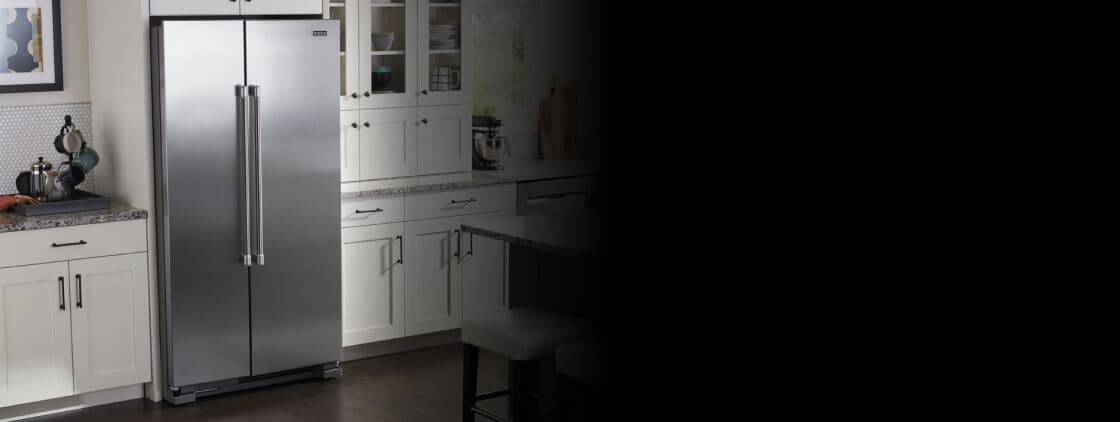
Maytag® refrigerators
Built strong to hold in the cold
Maytag® refrigerators are designed to help keep your perishables in their ideal climate
DO I NEED A GARAGE-READY REFRIGERATOR?
You may want a garage-ready refrigerator if you need an extra place to store cold food without worrying about fluctuating exterior temperatures, such as in a detached garage or an uninsulated room. Areas with extreme summers or winters may also benefit from a garage-ready refrigerator.
SHOP ALL MAYTAG® REFRIGERATORS
Maytag® refrigerators are built to handle major food hauls. Accommodate bulk grocery runs with features like the XL Capacity on select Maytag® refrigerators. Get a consistent cold from front to back so groceries stay at the right temperature with the EvenAir™ Cooling System on select Maytag® refrigerators. Shop all Maytag® refrigerators in a variety of configurations, including top freezer and side-by-side.


Your subscription was successful
Thank you for signing up. Keep an eye on your inbox for our next newsletter.
Sign Up for More Insights to Stay Connected
Enjoy articles like this? Get helpful guides and appliance care tips sent straight to your inbox.

