





 New Code Sent!

HOW DO GAS STOVES WORK: A COMPLETE GUIDE
Stoves are an essential part of any kitchen and are often fueled by gas. Understanding how gas stoves work can help you get the most out of your appliance so you can decide if a gas stove is right for your kitchen. Keep reading for an overview of each step of the gas stove and oven process, as well as commonly asked questions about gas stoves.

HOW DOES A GAS STOVETOP WORK?
Gas stovetops release fuel to a selected burner. Once the fuel reaches the burner, it mixes with an electrical spark and ignites into an adjustable flame. Keep reading for more details on how a gas stovetop works and the parts it uses to get the job done.

1. GAS IS RELEASED AND SENT TO THE BURNER
When the control knob is pushed and turned, a valve opens. This allows for the flow of fuel, usually natural gas or propane, to move through the internal burner assembly.

2. THE IGNITER LIGHTS AND DISTRIBUTES THE FLAME
The spark module cranks up the electrical voltage gas stovetops need to help light the flame. Then, the electrical voltage travels to the igniter tip next to the burner and leaps across the gap to the metal cap. As it leaps, you’ll hear a clicking sound. Once the gas hits the spark, it catches fire. The burners will then distribute the heat.
A steady blue flame indicates that the burner is operating normally, while yellow or orange flames suggest that the gas is not mixing properly with the oxygen, possibly resulting in uneven heating and soot buildup on your cookware. You may want to clean the burners or schedule maintenance if you notice yellow flames.

3. THE FLAME CONTROLS AND TRANSFERS HEAT
Once you turn the stove’s control knob past “Lite” or “Ignite” (the wording may vary depending on your model), the electricity cuts and the clicking should stop. You can control the flame size by turning the knob from low to high for more precise cooking. Burners vary in size, cooking function and recommended cookware.
Standard, or all-purpose, burners are typically medium-sized and yield about 8,000-12,000 BTUs. BTUs, also known as British Thermal Units, indicate how much heat a burner is able to produce. BTUs are an excellent way to quantify cooking power. The higher the BTU, the higher heat you can achieve with the flame.
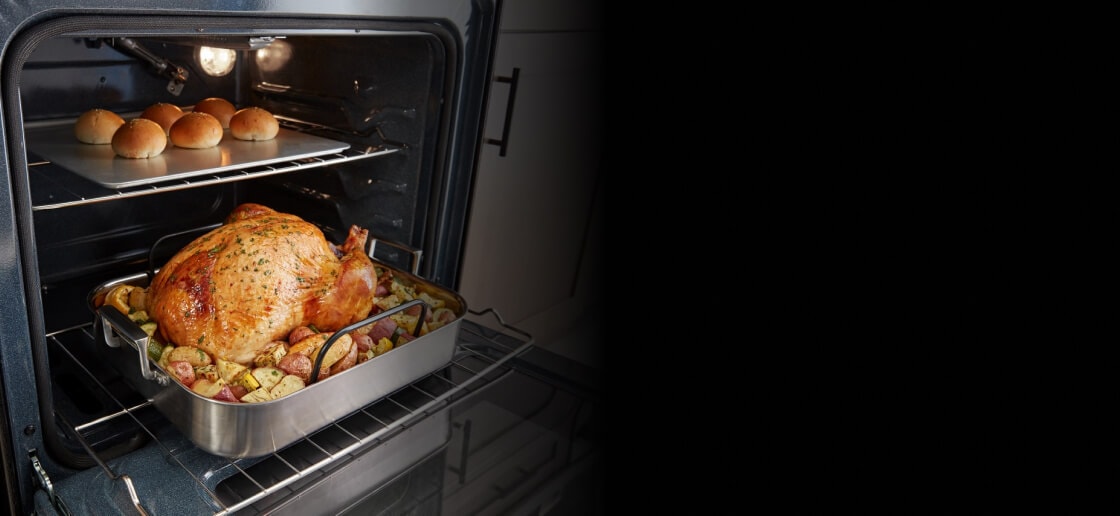
Maytag® kitchen ranges
POWERFUL COOKING FEATURES THAT WORK, MEAL AFTER MEAL
Maytag® ranges offer powerful cooking features and next-level cleanability to help make mealtime less of a chore
HOW DOES A GAS OVEN WORK?
Gas ovens generally use the same fuel and ignition principles as the stovetop, but in an enclosed cavity. They also rely on automatic temperature regulation, rather than the direct manual flame control of a cooktop. Keep reading for a step-by-step guide of how gas ovens work.

1. THE OVEN CALLS FOR HEAT
When the desired oven temperature is selected, the oven igniter will glow red hot to open the gas valve and the thermostat sends an electric current to the glow bar igniter. Ovens with an electric control panel activate a relay and send a current to the glow bar ignition system to light the burner. The oven uses electricity to operate, as it's not possible to manually light a gas oven.
2. GAS REACHES AND IGNITES AT THE OVEN BURNER
The igniter glow bar continues to heat up, eventually becoming so hot that the gas valve opens. Gas then flows to the burner tube and ignites the flame.

3. THE OVEN DISTRIBUTES AND REGULATES HEAT
The oven will begin to preheat, allowing the oven cavity to reach the target temperature before you insert your food. While cooking, the flame cycles on and off to maintain ideal cooking temperatures throughout the cycle. The lower bake burner provides the primary heat source while the upper broil burner provides targeted top-down heating.
Traditional thermal baking uses natural air circulation, which may be suitable for most recipes. Some models may feature convection cooking, which uses a fan to circulate hot air around the oven. If your food is coming out under or overcooked, your oven may need to be calibrated.

HOW COOKTOPS AND OVENS USE GAS DIFFERENTLY
| APPLIANCE | HOW HEAT IS GENERATED | HOW HEAT IS DELIVERED | HOW HEAT IS REGULATED | TIME | USE CASES |
|---|---|---|---|---|---|
| COOKTOP | Visible burner flame | Cookware is heated directly | Flames are adjusted manually | Almost instant cooktop ignition | Sear, saute, boil and stir-fry |
| OVEN | Concealed bake burner | Food is heated in an enclosed cavity | Flames cycle on and off to keep a consistent internal temperature | Oven must preheat before cooking | Bake, broil and roast |


GAS STOVE FAQS
Get answers to frequently asked questions about gas stoves, including burner sizes, safety and more.
Burner sizes range from small to extra large, often to accommodate different cooking styles and cookware. Small burners can be helpful for precise, low-flame cooking like simmering, while large burners are ideal for boiling and fast cooking. Medium burners are often used as an all-purpose burner.
Extra-large burners often come with a high BTU for fast boiling, large pots or specialty cookware. They may also heat griddles on stoves that offer a griddle feature.
First, ensure your burners have not been accidentally switched on. If your stove’s burners are off, one of your oven's parts or gas supply may need to be serviced. It may also be a gas leak. If you suspect a gas leak, leave your house immediately and call 911 when you are a safe distance away.
Gas leaks may also be accompanied by a hissing noise along with headaches and dizziness. If you believe you have a gas leak in your home, don’t attempt to find or fix it yourself and don’t use anything electrical that may cause a spark. You should always leave the premises and have a professional find and fix a gas leak.
Like any oven, opening the oven door while cooking will allow heat to escape and cause the internal temperature of the oven to drop. This may cause your food to not cook properly. For best results, keep the oven door shut while cooking food.
SHOP MAYTAG® GAS RANGES

Double oven ranges
A range you can count on, no matter the meal
Start dinner on time, any time when you cook multiple dishes at different temperatures with Maytag® double oven ranges


Your subscription was successful
Thank you for signing up. Keep an eye on your inbox for our next newsletter.
Sign Up for More Insights to Stay Connected
Enjoy articles like this? Get helpful guides and appliance care tips sent straight to your inbox.

